I am so excited to discuss affiliate marketing because it is truly one of the EASIEST ways to make money online. It’s not a simple process because there’s a lot of strategies that go into it, but this is what they mean when they say make money while you sleep.
Affiliate marketing is in my top 20 list of stay at home mom jobs because it does not require you to produce anything, deliver a service, be chained to the phone OR managed by the clock.
It was a pleasure to get to talk to April Lewis who is an Affiliate Strategist making up to $6,000 per month in affiliate sales. April shares with us the best affiliate programs to make money that she uses and exactly how she does it using Facebook.
I love affiliate marketing because there are so many ways you can use it.
My approach is different from April’s and I earn six figures! I talk about my approach in this video here
When you apply to Affiliate Programs many will require you to sign a W-9, instead of giving your Social Security Number be safe and apply for an EIN. It’s quick, free, and easy to do with the IRS online, you can click here to apply for an EIN.
Let’s first get started with the basics and then we’ll show you the best Affiliate Programs to make money.
What is Affiliate Marketing?
Affiliate Marketing is when you refer someone to a product or service online using a unique link and if they make a purchase through your link you earn a commission.
You know how you recommend different products or places to friends? Well, now you can get paid for it!
Companies want to get found in this crowded marketplace (the internet), and they need people to help spread the word about their product/service. So much that they will pay you a commission for referring people to their site that make a purchase.
How do I get a unique link?
You have to apply and become approved by the company before you can get started. Almost every company has an affiliate program nowadays.
When searching to see if a company has an affiliate program Google the “company’s name + affiliate program” and it will typically be one of the top 2 search results (if they have one).
When applying to become an affiliate they will almost ALWAYS ask if you have a website. If you don’t have a website, see my step-by-step guide on how I started this one for only $84.
Once approved, you will be given a unique link that you will use every time you reference the company.
Each company has different rules to become an affiliate, and some require a certain amount of visitors to your site each month.
Related: See how I get massive traffic using Pinterest
Affiliate Marketing works best when you have an audience that trusts you, and you promote products/services you’ve actually used.
This post contains affiliate links, which means I may receive a small commission, at no cost to you, if you make a purchase through a link.
Real Life Example
April Lewis has a website and purchased ConvertKit (Email Marketing Platform) to capture leads to her site. She fell in love with the tool and signed up to be one of their affiliates (aka someone who gets a “cut” for each referral)
April receives $8.70 each time someone uses her link to purchase ConvertKit and she currently makes $600 per month from this product alone (she is involved in multiple affiliate programs).
Related: You can see how I made $500 and counting below with Milotree.
How does she use Affiliate Marketing?
Facebook Groups!
The way April promotes on Facebook is nothing short of AMAZING and has completely blown my mind on how simple it is yet I’ve never considered using Facebook this way. I wish I could tell it, but it really needs to be seen. April shares with us exactly how she does it in this Video on Social Networking.
April is no stranger to making money online, she also runs a digital marketing business and has been making money through affiliate marketing for the past two years.
Although April’s approach to Affiliate Marketing is brilliant, it’s not for everyone. If you’re looking to make $1,000+ per month using other avenues than Facebook DEFINITELY check out my absolute favorite blogger’s course Affiliate Marketing for Beginners. I have learned so much from her and she is a big reason for my blogging success.
I asked April some additional questions to help us better understand how this works.
Best Affiliate Programs (Companies April Use)?
I’m an affiliate for ConvertKit, Acuity, 17hats, Beaver Builder, Dia & Co, SunBasket, and for some masterminds and workshops that are high ticket offers.
Max here: Milotree (see below) is personally my favorite and EASIEST Affiliate programs to make money.
What social media platforms do you use?
Facebook exclusively.
Any cons to Affiliate Marketing?
It’s like a snowball, takes a bit to grow a decent sized stream, but when it does, it compounds nicely. Plus I teach my affiliate students the long game, which is content is king.
How many hours do you work a week?
The most are about 40 hours, but the average is probably around 30 hours/week. Sometimes even much less… depends on the season and if I’m growing a new initiative or income stream.
Any additional advice you’d like to provide for people wanting to get started?
I have a few different freebies that could help and a few different courses. They can all be found here: https://aprildlewis.com/made-easy-academy/.
I’d like to thank April for helping us better understand Affiliate Marketing through Facebook. For more information on April and her business, you can check it out at www.aprildlewis.com.
I’ve personally made $500 with Milotree and it increases almost daily.
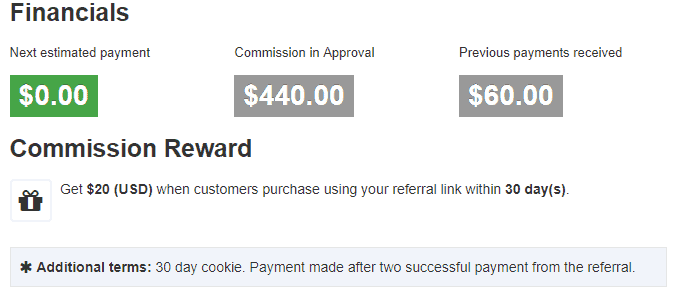
I get so many followers with this pop-up that I wrote about here. Bloggers who want the same results sign up using my affiliate link and I get $20 per sign up AND I also get paid if someone clicks on the pop-up and makes a purchase even if they never read my article. I explain more in detail here but it is by far the EASIEST affiliate program to make money.

This is how Affiliate Marketing works. You find products that work for you, show others the value of it and you both win when they purchase through your affiliate link.
Related: How to Get Organic Followers Quickly
Affiliate Marketing can be done in a variety of ways. A lot of people use their blog and email list to promote different products and services or like April, just Facebook.
Here are some little-known ways to find out what affiliate programs your competition is using
Strike Out No Follow Links is a free Google Chrome extension that helps you figure out what Affiliate links your competition is using (or that’s at least why I use it) as long as they aren’t using a plug-in like Pretty Links or a plug-in that makes all of their links no-follow, but I can show you how to get around that also.
By downloading this Google Chrome extension it will automatically cross out any link that is a no-follow link (see example in the screenshot below) for any site you visit.

You see how Milotree is crossed out? That’s my affiliate link and it’s crossed out because I made it a no-follow link. This is also a good tool to use if you want to Guest post on a blog and see if they allow do-follow links (which you want) by looking at previous Guest post articles.
If someone is using a tool like Pretty Links you can tell if it’s an affiliate link when you hover over the hyperlink with your mouse on your desktop and see their domain name followed by whatever word they chose in the lower left-hand corner of your screen.
For example, I used the Pretty Links tool in this post. See what happens when I hover over “Fanatics”? If you look at the url in the bottom left-hand corner, you can see how I disguised the affiliate link url using Pretty Links. This is another little-known way to find out what affiliate program your competitors is using.
I hope you enjoyed this article, and if you liked this content be sure to subscribe to our mailing list for more content like this!


